
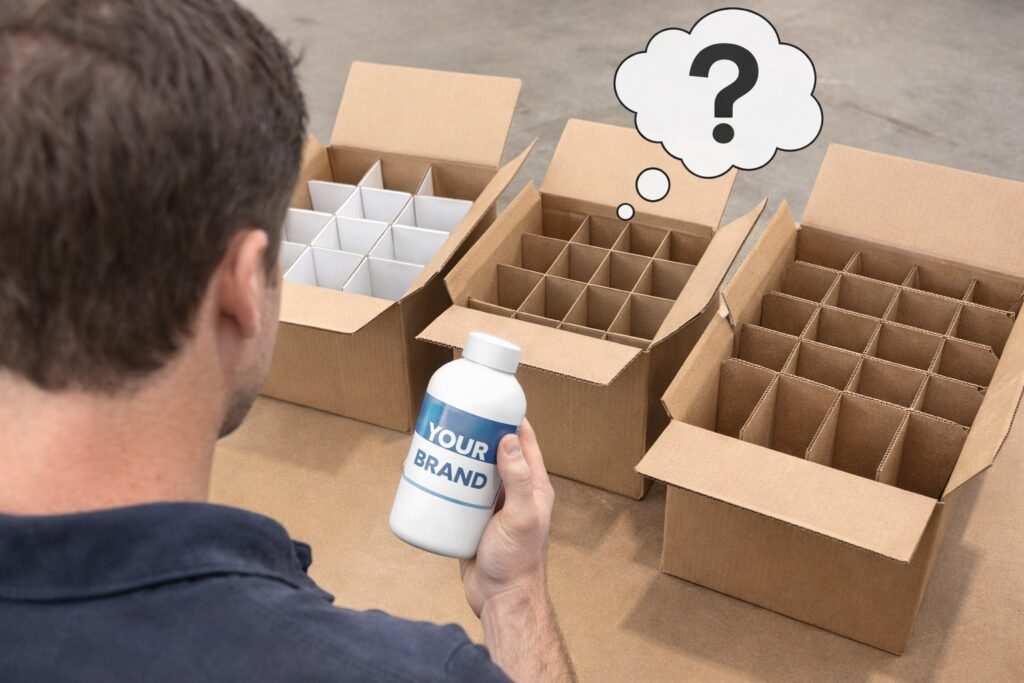
When it comes to protective packaging, the material you choose for your box partitions plays a critical role in the condition of your products when they arrive at their destination.
The right partition material can reduce breakage, improve packing efficiency, control costs, and ultimately protect your brand reputation. The wrong choice, however, can lead to damaged goods, higher return rates, and unnecessary expenses.
With options like SBS paperboard, chipboard, and corrugated partitions, selecting the best fit requires more than a one-size-fits-all approach. Each material offers different performance characteristics, making them better suited for specific product types, weights, and shipping environments.
Below, we break down how to evaluate partition materials and match them to your products with confidence.
Why Partition Material Selection Matters
Box partitions are designed to separate, stabilize, and protect products during handling, transit, and storage. While overall box strength is important, the internal partition system is often what determines whether items stay intact or collide during shipment.
Choosing the correct partition material affects:
- Product protection and damage prevention
- Packing speed and consistency
- Material and freight costs
- Sustainability goals
- Customer satisfaction upon delivery
Understanding how each material performs allows packaging and operations teams to design solutions that protect products without overengineering.
Common Box Partition Materials Explained
SBS (Solid Bleached Sulfate)
SBS partitions are made from high-quality paperboard known for its smooth surface, consistent thickness, and clean white appearance.
Best suited for:
- Fragile items such as glass, cosmetics, or pharmaceuticals
- Products requiring precise cell dimensions
- Applications where presentation and cleanliness matter
Key advantages:
- Excellent rigidity and uniformity
- Clean, professional appearance
- Reliable performance for lightweight to medium-weight items
- Comes in multiple finishes such as Poly Coated, Clay Coated and Milkboard
SBS is often chosen when product protection must be paired with a polished, premium look or a pharmaceutical level of safety is required.
Chipboard Partitions
Chipboard partitions are made from recycled paper materials and offer a cost-effective solution for many packaging needs.
Best suited for:
- Products ranging from light to heavy
- High-volume shipping applications
- Situations where sustainability is a priority
Key advantages:
- Economical and widely available
- Recyclable and environmentally friendly
- Comes in a wide range of thicknesses allowing for custom material selection for your specific product.
- Flexible enough for a wide range of product shapes
Chipboard is a popular choice for businesses balancing protection, cost control, and environmental responsibility. 90% of products can be safely shipped using chipboard box partitions.
Corrugated Partitions
Corrugated partitions incorporate fluted material, offering enhanced strength and cushioning.
Best suited for:
- Very Heavy or bulky products
- Products exposed to rough handling environments such as ecommerce B2C shipments.
Key advantages:
- Superior compression strength
- Added shock absorption
- Increased durability for demanding shipping conditions with very heavy items.
Corrugated partitions are often used when product weight or transit conditions require extra reinforcement.
Matching Material to Product Type
Below, we have laid out some key considerations you will want to take into account to avoid common mistakes companies make when ordering packaging partitions. This will help you ensure you order the right partitions for your business’ needs.
Fragile Products
Glass, ceramics, and sensitive components benefit from materials that maintain consistent separation and limit movement. SBS or well-designed chipboard partitions perform best in these scenarios.
Heavy Products
Weight places stress on partitions during stacking and transit. Corrugated partitions are typically the preferred choice for heavier items due to their structural strength.
Irregularly Shaped Products
Products with uneven dimensions or unique profiles require partitions that can be custom-configured. Chipboard and corrugated materials offer flexibility for customized cell sizes and layouts.
High-Volume Shipments
For operations shipping large quantities of similar products, chipboard partitions often provide the best balance of performance and cost efficiency.
Other Factors to Consider
Material selection shouldn’t happen in isolation. Additional factors can influence the best choice for your application:
- Shipping distance and handling frequency
- Stacking requirements and palletization
- Automation compatibility
- Sustainability initiatives
- Budget constraints
Working with a packaging partner that understands these variables helps ensure the partition design supports your entire operation—not just the product itself.
Why Custom Partition Design Matters
Even the best material won’t perform well if the partition design doesn’t match the product. Custom cell sizing, board thickness, and configuration all play a role in how effectively a partition protects items during shipment.
At General Partition, we work closely with customers to evaluate product characteristics, shipping conditions, and operational requirements. This collaborative approach ensures each partition solution is designed for real-world performance, not just theoretical protection.
Making the Right Choice
Choosing the right box partition material is about aligning protection needs with product characteristics and operational goals. By understanding the strengths of SBS, chipboard, and corrugated partitions (and how they perform in different applications) you can reduce damage, control costs, and deliver a better experience to your customers.
If you’re unsure which material is best for your products, working with an experienced partition manufacturer can simplify the process and help you avoid costly mistakes.
Contact General Partition to discuss your packaging requirements and explore custom partition solutions designed to protect your products and your bottom line. Or, visit our website to get your free quote.
FAQ: Choosing the Right Box Partition Material
What is the best box partition material for fragile products?
Fragile products often benefit from SBS or corrugated partitions, which provide consistent cell structure and stability to minimize movement and reduce the risk of breakage during transit.
When should corrugated partitions be used instead of chipboard?
Corrugated partitions are best suited for heavier products, long-distance shipping, or environments where packages may experience increased handling or stacking pressure.
Are chipboard partitions strong enough for shipping?
Yes. Chipboard partitions are widely used for medium-weight products and high-volume shipments. They offer a cost-effective, recyclable solution when properly designed for the application.
How does partition material affect shipping costs?
Partition material influences weight, protection level, and damage rates. Choosing the right material helps prevent product loss and returns, which can reduce overall shipping and operational costs.
Can box partitions be customized for unique product shapes?
Absolutely. Custom partition designs allow cell size, configuration, and material thickness to be tailored to your product’s dimensions, ensuring better fit and protection.